
Gardens & Food Forest
Annual crops, perennial food systems, herbs, raised beds, seed starting, compost, and experimental growing areas.
Appalachian permaculture in practice
More than 30 acres where water, soil, food, animals, habitat, old buildings, and human work are designed as one connected learning landscape.
Land as teacher
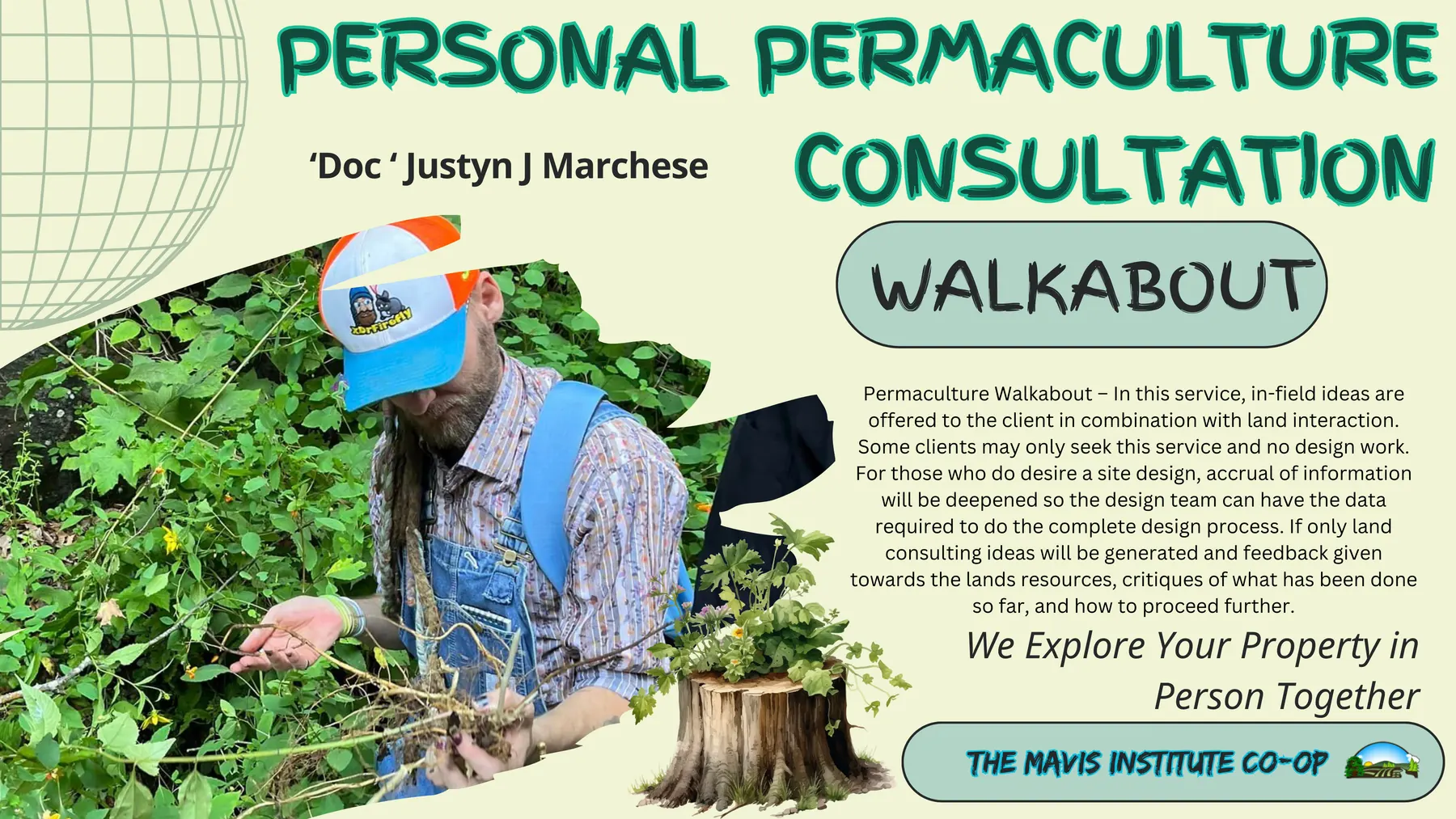
The land program applies permaculture and regenerative agriculture to the realities of a southern West Virginia property. The work begins by observing how water moves, where soil collects or erodes, how plants and animals interact, and what existing systems can become.
The aim is not to make a conventional system slightly less damaging. It is to develop better patterns for food, water, habitat, education, and everyday life.
Annual crops, perennial food systems, herbs, raised beds, seed starting, compost, and experimental growing areas.
Streams, runoff management, seasonal ponds, water retention, and landscape hydrology.
Chickens and ducks as living parts of fertility, food systems, education, and daily farm care.
Honeybees, pollinator education, habitat, and careful land stewardship.
Compost, mushrooms, soil building, trails, wildlife habitat, and land restoration.
Mavis Manor, the Farmlab, Coopenheimer Barn, and future spaces that connect practice with teaching.
Current overview reviewed July 22, 2026. Individual project status is maintained on the Projects page.